13 Objections to Baptism
by
Dave Miller, Ph.D. (used by permission-see end notes)
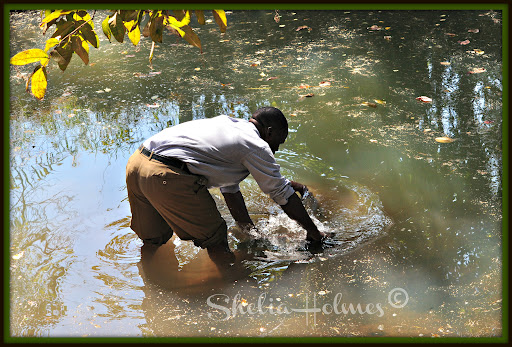
Some churches historically have taught that water immersion is the dividing line between the lost and the saved. This means that a penitent believer remains unforgiven of sin until buried in the waters of baptism (Romans 6:4). Much of the denominational world disagrees with this analysis of Bible teaching, holding instead that one is saved at the point of “belief,” before and without water baptism. Consider some of the points that are advanced in an effort to minimize the essentiality of baptism for salvation.
Objection #1: “Jesus could not have been baptized for the remission of sins because He was sinless; therefore, people today are not baptized in order to be forgiven. They merely imitate Jesus’ example.”
The baptism to which Jesus submitted Himself was John’s baptism (Matthew 3:13; Mark 1:9). John’s baptism was for the remission of sins (Mark 1:4; Luke 3:3). This truth is particularly evident from the fact that when Jesus presented Himself to John for baptism, John sought to deter Him, noting that, if anything, Jesus needed to baptize John (Matthew 3:14). Jesus did not correct John, as many seek to do today, by falsely arguing that baptism is not for remission of sins. Rather, Jesus, in effect, agreed with John, but made clear that His baptism was an exception to the rule.
Jesus’ baptism was unique and not to be compared to anyone else’s baptism. Jesus’ baptism had the unique purpose of “fulfilling all righteousness” (Matthew 3:15). In other words, it was necessary for Jesus to submit to John’s baptism (1) to show His contemporaries that no one is exempt from submitting to God’s will and (2) more specifically, Christ’s baptism was God’s appointed means of pinpointing for the world the precise identity of His Son. It was not until John saw the Spirit of God descending on Jesus and heard the voice (“This is My Son…”) that he knew that “this is the Son of God” (John 1:31-34; Matthew 3:16-17).
Of course, John’s baptism is no longer valid (Acts 18:24-19:5). John’s baptism paralleled New Testament baptism in the sense that both were for the forgiveness of sins. But John’s baptism was transitional in nature, preparing Jews for their Messiah. Baptism after the cross is for all people (Matthew 28:19), in Jesus’ name (Luke 24:47; Acts 2:38; 19:5), into His death (Romans 6:3), in order to be clothed with Him (Galatians 3:27), and added to His church (Acts 2:47; 1 Corinthians 12:13). We must not use Jesus’ baptism to suggest that salvation occurs prior to baptism.
Objection #2: “The thief on the cross was not baptized, and he was saved.”
When we “handle aright the word of truth” (2 Timothy 2:15), we see that the thief was not subject to the New Testament command of immersion because this command was not given until after the thief’s death.¹ It was not until Christ was resurrected that He said, “He who believes and is baptized will be saved” (Mark 16:16). It was not until Christ’s death that the Old Testament ceased, signified by the tearing of the Temple curtain (Matthew 27:51). When Jesus died, He took away the Old Testament, “nailing it to the cross” (Colossians 2:14).
The word “testament” means “covenant” or “will.” The last will and testament of Christ is the New Testament, which consists of those teachings that apply to people after the death of Christ. If we expect to receive the benefits of the New Testament (salvation, forgiveness of sin, eternal life), we must submit to the terms of the will for which Christ is mediator (Hebrews 9:15), for “where a testament is, there must also of necessity be the death of the testator; for a testament is of force after men are dead; otherwise it is of no strength at all while the testator lives” (Hebrews 9:16-17).
So prior to the Lord’s death and the sealing of the New Testament, the baptism for the forgiveness of sins that would be in effect after the crucifixion was not a requirement for those who sought to be acceptable to God. Indeed, while Jesus was on Earth in person, He exercised His authority to forgive sin (Matthew 9:6). People now, however, live during the Christian era of religious history. Prior to Christ’s death, there were no Christians (Acts 11:26). For a person to reject water baptism as a prerequisite to salvation on the basis of what the thief did or did not do, is comparable to Abraham seeking salvation by building an ark—because that’s what Noah did to please God. It would be like the rich young ruler (Matthew 19) refusing Christ’s directive to sell all his possessions—because wealthy King David did not have to sell his possessions in order to please God.
The thief on the cross could not have been baptized the way the new covenant stipulates you and I must be baptized. Why? Romans 6:3-4 teaches that if we wish to acquire “newness of life,” we must be baptized into Christ’s death, be buried with Christ in baptism, and then be raised from the dead. There was no way for the thief to comply with this New Testament baptism—Christ had not died! Christ had not been buried! Christ had not been raised! In fact, none of God’s ordained teachings pertaining to salvation in Christ (2 Timothy 2:10), and in His body the Church (Acts 2:47; Ephesians 1:22-23), had been given. The church, which Christ’s shed blood purchased (Acts 20:28), had not been established, and was not set up until weeks later (Acts 2).2
We must not look to the thief as an example of salvation. Instead, we must obey “from the heart that form of doctrine” (Romans 6:17)—the form of Christ’s death, burial, and resurrection through baptism (Romans 6:3-4). Only then can we be “made free from sin to become the servants of righteousness” (Romans 6:18).
Objection #3: “The Bible says, ‘Christ stands at the door of your heart,’ and all we have to do to be forgiven of sin and become a Christian is to invite Him into our hearts.”
It is no doubt startling to discover that the Bible simply does not say such a thing. The phraseology is reminiscent of Revelation 3:20—the passage usually invoked to support the idea. But examine what Revelation 3:20 actually teaches. Revelation chapters 2 and 3 consist of seven specific messages directed to seven churches of Christ in Asia Minor in the first century. Thus, at the outset, we must recognize that Revelation 3:20 is addressed to Christians—not non-Christians seeking conversion to Christ.
Second, Revelation 3:20 is found among Christ’s remarks to the church in Laodicea. Jesus made clear that the church had moved into a lost condition. The members were unacceptable to God since they were “lukewarm” (3:16). They had become unsaved since their spiritual condition was “wretched and miserable and poor” (3:17). Thus, in a very real sense, Jesus had abandoned them by removing His presence from their midst. Now He was on the outside looking in. He still wanted to be among them, but the decision was up to them. They had to recognize His absence, hear Him knocking for admission, and open the door—all of which is figurative language indicating their need to repent (3:19). They needed to return to the obedient lifestyle essential to sustaining God’s favor (John 14:21,23).
Observe that Revelation 3:20 in no way supports the idea that non-Christians merely have to “open the door of their heart” and “invite Jesus in” with the assurance that the moment they mentally/verbally do so, Jesus comes into their heart and they are simultaneously saved from all past sin and have become Christians. The context of Revelation 3:20 shows that Jesus was seeking readmission into an apostate church.
Does the Bible teach that Christ comes into a person’s heart? Yes, but not in the way the religious world suggests. For instance, Ephesians 3:17 states that Christ dwells in the heart through faith. Faith can be acquired only by hearing biblical truth (Romans 10:17). When Bible truth is obeyed, the individual is “saved by faith” (Hebrews 5:9; James 2:22; 1 Peter 1:22). Thus Christ enters our lives when we “draw near with a sincere heart in full assurance of faith, having our hearts sprinkled from an evil conscience [i.e, repentance—DM] and our bodies washed with pure water [i.e., baptism—DM]” (Hebrews 10:22).
Objection #4: “A person is saved the moment he accepts Christ as his personal Savior—which precedes and therefore excludes water baptism.”
To suggest that all one has to do to receive the forgiveness of God and become a Christian is to mentally accept Jesus into his heart and make a verbal statement to that effect, is to dispute the declaration of Jesus in Matthew 7:21—“Not everyone who says to Me, ‘Lord, Lord,’ shall enter the kingdom of heaven, but he who does the will of My Father in heaven.” To be sure, oral confession of Christ is one of the prerequisites to salvation (Romans 10:10). But Jesus said there is more to becoming a blood-bought follower of His than verbally “calling on his name”3 or “inwardly accepting Him as Savior.” He stated that before we can even consider ourselves as God’s children (Christians), we must show our acceptance of His gift through outward obedience—“He that does the will of My Father.” Notice the significant contrast Jesus made: the difference between mental/verbal determination to accept and follow the Lord, versus verbal confession coupled with action or obedience (cf. James 2:14,17). This is why we must do everything the Lord has indicated must be done prior to salvation. Jesus is telling us that it is possible to make the mistake of claiming we have found the Lord, when we have not done what He plainly told us to do.
Jesus said: “Most assuredly, I say to you, unless one is born of water and the Spirit, he cannot enter the kingdom of God” (John 3:5). Jesus also stated: “He who believes and is baptized will be saved; but he who does not believe will be condemned” (Mark 16:16). Honestly, have you accepted Christ as your personal savior—in the way He said it must be done? He asks: “But why do you call Me ‘Lord, Lord,’ and do not do the things which I say?” (Luke 6:46, emp. added).
Objection #5: “We are clothed with Christ and become His children when we place our faith in Him.”
Read Galatians 3:26-27: “You are all children of God by faith in Christ Jesus, for as many of you as have been baptized into Christ have put on Christ.” The words “put on” (NKJV) are a translation of the Greek verb enduo which signifies “to enter into, get into, as into clothes, to put on.” Can we be saved prior to “putting Christ on” or “being clothed” with Christ? Of course not. But when and how does one put on Christ—according to Paul? When one is baptized in water. Those who teach we can be saved before baptism are, in reality, teaching we can be saved while spiritually naked and without Christ! Paul affirms that we “put on” Christ at the point of our baptism—not before.
Paul wrote these words to people who were already saved. They had been made “sons of God by faith.” But how? At what point had they “been clothed with Christ”? When were they made “sons of God by faith”? When were they saved? Paul makes the answer to these questions very plain: they were united with Christ, had put on Christ, and were clothed with Christ—when they were baptized. Ask yourself if you have been clothed with Christ.
Objection #6: “Baptism is like a badge on a uniform that merely gives evidence that the person is already saved.”
The New Testament nowhere expounds the idea that baptism is merely a “badge” or “outward sign of an inward grace.” Yes, baptism can biblically be referred to as a symbolic act; but what does it symbolize? Previous forgiveness? No! Romans 6 indicates that baptism symbolizes the previous death, burial, and resurrection of Jesus. Thus the benefits of Jesus’ death, burial, and resurrection (remember, Jesus’ blood, which blots out sin, was shed in the context of His death, burial, and resurrection) are realized and received by the individual when he obediently (in penitent faith) submits to a similar ordeal, i.e., the death of his own “old man” or “body of sin” (Romans 6:6), burial (immersion into a watery tomb), and resurrection (rising from the watery tomb).
Denominational doctrine maintains that forgiveness of sin is received prior to baptism. If so, the “new life” of the saved individual would also begin prior to baptism. Yet Paul said the “new life” occurs after baptism. He reiterated this to the Colossians. The “putting off of the body of the flesh by Christ’s circumcision” (Colossians 2:11) is accomplished in the context of water immersion and being “risen with Him” (Colossians 2:12). Chapter 3 then draws the important observation: “If then you were raised with Christ [an undeniable reference to baptism—DM], seek those things which are above” [an undeniable reference to the new life which follows—not precedes—baptism].
Objection #7: “Baptism is a meritorious work, whereas we are saved by grace, not works.”
“Works” or “steps” of salvation do not imply that one “merits” his salvation upon obedient compliance with those actions. Rather, “steps” or “a process” signifies the biblical concept of preconditions, stipulations of faith, or acts of obedience—what James called “works” (James 2:17). James was not saying that one can earn his justification (James 2:24). Rather, he was describing the active nature of faith, showing that saving faith, faith that is alive—as opposed to dead and therefore utterly useless (2:20)—is the only kind that is acceptable to God, a faith that obeys whatever actions God has indicated must be done. The obedience of both Abraham and Rahab is set forth as illustrative of the kind of faith James says is acceptable. They manifested their trust by actively doing what God wanted done. Such obedient or active trust is the only kind that avails anything. Thus, an obedient response is essential.
The actions themselves are manifestations of this trust that justifies, not the trust itself. But notice that according to James, you cannot have one without the other. Trust, or faith, is dead, until it leads one to obey the specifications God assigned. Here is the essence of salvation that separates those who adhere to biblical teaching from those who have been adversely influenced by the Protestant reformers. The reformers reacted to the unbiblical concept of stacking bad deeds against good deeds in an effort to offset the former by the latter (cf. Islam). Unfortunately, the reactionary reformers went to the equally unacceptable, opposite extreme by asserting that man need “only believe” (Luther) or man can do nothing at all (Calvin). The truth is between these two unbiblical extremes.
From Genesis to Revelation, faith is the trusting, obedient reaction that humans manifest in response to what God offers. This is the kind of “justification by faith” that Paul expounded in Romans. Like red flags at the very beginning (1:5) and at the end (16:26) of his divinely inspired treatise, he defined what he meant by “faith” with the words “obedient faith” (hupakoeinpisteos), i.e., faith that obeys, obedience which springs from faith.4 This fact is precisely why God declared His willingness to fulfill the promises He made to Abraham: “because Abraham obeyed My voice and kept My charge, My commandments, My statutes, and My laws” (Genesis 26:5). Hence, in Romans Paul could speak of the necessity of walking “in the steps of the faith which our father Abraham had” (Romans 4:12). Until faith obeys, it is useless and cannot justify.
The Hebrews writer made the same point in Hebrews 11. The faith we see in Old Testament “men of faith” availed only after they obeyed God-given stipulations. God rewards those who “diligently seek Him” in faith (vs. 6). Noah “became heir of the righteousness which is by faith” when he “prepared an ark.” If he had not complied with divine instructions, he would have been branded as “unfaithful.” The thing that made the difference, that constituted the line of demarcation between faith and lack of faith, was obedient action—what James called “works,” and Paul called “faith working through love” (Galatians 5:6). In this sense, even faith is a “work” (John 6:29). Hebrews 11 repeatedly reinforces this eternal principle: (1) God offers grace (which may at any point in history consist of physical blessings, e.g., healing, salvation from enemies, land or property, etc., or spiritual blessings, e.g., justification, forgiveness, salvation from sin, being made righteous, etc.); (2) man responds in obedient trust (i.e., “faith”) by complying with the stipulated terms; and (3) God bestows the blessing.
It would be wrong to think that man’s obedient response earns or merits the subsequent blessing. Such simply does not logically follow. All blessings God bestows on man are undeserved (Luke 17:10). His rich mercy and loving grace is freely offered and made available—though man never deserves such kindness (Titus 2:11). Still, a non-meritorious response is absolutely necessary if unworthy man is to receive certain blessings.
Objection #8: “Not only is baptism nonessential to salvation, even faith is a gift from God to a person. Man is so depraved that he is incapable of believing.”
Surely, God’s infinite justice would not permit Him to force man to desire God’s blessings. God’s intervention into man’s woeful condition was not in the form of causing man to desire help or miraculously generating faith within man. God intervened by giving His inspired Word, which tells how He gave His Son to make a way for man to escape eternal calamity. Faith is then generated in the individual by God’s words which the person must read and understand (Romans 10:17; Acts 8:30). The individual then demonstrates his faith in obedience.
Did the walls of Jericho fall down “by faith” (Hebrews 11:30)? Absolutely. But the salient question is: “When?” Did the walls fall the moment the Israelites merely “believed” that they would fall? No! Rather, when the people obeyed the divine directives. The walls fell “by faith” after the people met God’s conditions. If the conditions had not been met, the walls would not have fallen down “by faith.” The Israelites could not claim that the walls fell by their own effort, or that they earned the collapse of the walls. The city was given to them by God as an undeserved act of His grace (Joshua 6:2). To receive the free gift of the city, the people had to obey the divinely stipulated prerequisites.
Notice the capsuling nature of Hebrews 11:6. Faith or belief is not given by God. It is something that man does in order to please God. The whole chapter is predicated on the fundamental idea that man is personally responsible for mustering obedient trust. God does not “regenerate man by His call, thus enabling man to respond.” God “calls” individuals through, by means of, His written Word (2 Thessalonians 2:14). In turn, the written Word can generate faith in the individual (Romans 10:17). How unscriptural to suggest that man is so “totally depraved” that he cannot even believe, thus placing God in the position of demanding something from man (John 8:24) of which man is inherently incapable. But the God of the Bible would not be guilty of such injustice.
Some people approach passages like Romans 10:17 in this fashion: (1) God chooses to save an individual; (2) God gives him the free gift of faith; and (3) God uses the Gospel to stir up the faith which He has given the person. Yet neither Romans 10:17, nor any other passage, even hints at such an idea. The text states explicitly that faith comes from hearing Christ’s Word. Notice verse 14, where the true sequence is given: (1) the preacher preaches; (2) the individual hears the preached word; and (3) believes. This sequence is a far cry from suggesting that God miraculously imparts faith to a person, and then the Holy Spirit “stirs up” the faith. Such a notion has God giving man a defective faith which then needs to be stirred up. The text makes clear that God has provided for faith to be generated (i.e., originated) by the preached Word. God does not arbitrarily intervene and impose faith upon the hearts of a select group of individuals.
According to 1 Corinthians 1:21, mankind did not know God, so God transmitted His message through inspired preachers so that those who respond in faith would be saved. Paul wrote in Romans 1:16 that this gospel message is God’s power to save those who believe it. Notice that the Gospel is what Paul preached (vs. 15). Thus the preached message from God generates faith and enables people to be saved.
We see the same in Acts 2:37. What pierced the hearts of the listeners? Obviously, the sermon. Acts 2:37 is a demonstration of Romans 10:17—“faith comes by hearing…the word of God.” God did not change the hearts of the people miraculously; Peter’s words did. If denominational doctrine is correct, when the Jews asked the apostles what they should do, Peter should have said: “There’s nothing you can do. You are so totally depraved, you can’t do anything. God will regenerate you; He will cause you to believe (since faith is His ‘free gift’).” Yet, quite to the contrary, Peter told them that they needed to do some things. And they were things that God could not do for them.
First, they were required to “repent.” Biblical repentance is a change of mind (Matthew 21:29). A “turning” follows repentance (Acts 3:19) and consists of some specified action subsequent to the change of mind. John the Baptizer called this turning activity, which follows repentance and serves as evidence that repentance has occurred, “fruits” (Matthew 3:8). After being convicted (Acts 2:37—i.e., believing the truth of Peter’s contentions), they were told to “repent,” to change their minds about their previous course of life. What else were they to do?
Peter did not tell them to “repent and believe.” Their belief was already abundantly evident in their pricked hearts and their fervent petition for instructions. What was lacking? Peter said (i.e., God said) they still lacked baptism. Remember, the only difference between dead faith and saving faith is outward action—compliance with all actions that God specifies as necessary before He will freely bestow unmerited favor in the form of forgiveness.
Thus baptism marked the point at which God would count them righteous if they first believed and repented. Baptism served as the line of demarcation between the saved and the lost. Jesus’ blood could wash their sins away only at the point of baptism.
Objection #9: “The preposition ‘for’ in the phrase ‘for the remission of sins’ in Acts 2:38 means ‘because of.’ Hence, they were baptized because of sins for which they were forgiven when they believed.”
The English word “for” has, as one of its meanings, “because of.” However, the Greek preposition eis that underlies the English word “for” never has a causal function. It always has its primary, basic, accusative thrust: unto, into, to, toward. We must not go to the text, decide what we think it means, and assign a grammatical meaning that coincides with our preconceived understanding. We must begin with the inspired grammar and seek to understand every text in light of the normal, natural, common meaning of the grammatical and lexical construction. The same grammatical construction of Acts 2:38 is found in Matthew 26:28—“into the remission of sins” (eisaphesin hamartion). Jesus’ blood, the blood of the covenant, was undeniably shed for many “in order to acquire remission of sins.” This is the natural and normal meaning of the Greek preposition—toward, in the direction of. Had the Holy Spirit intended to say that baptism is “because of” or “on account of” past forgiveness, He would have used the Greek preposition that conveys that very idea: dia with the accusative.
Similarly, in Acts 2:38, if repentance is not “because of” remission of sins, neither is baptism. Regardless of person and number considerations, Peter told his hearers to do both things. The act of baptism (connected to the act of repentance by the coordinate conjunction) cannot be extricated from the context of remission of sins by any stretch.
Objection #10: “When the Philippian jailer asked what to do to be saved, he was simply told to believe on the Lord Jesus Christ.”
As further proof that God does not miraculously bestow faith on a person through the Holy Spirit, observe that Paul told the jailer that he (the jailer) had to believe; he did not answer the jailer’s question with: “You don’t have to do anything. God will give you faith.” On the contrary, Paul and Silas told him that he had to manifest faith in Jesus. But was this pagan jailer in a position at that moment to do so? No, he would have to be taught Who, how, and what to believe. No wonder, then, Luke records immediately: “they spoke the word of the Lord to him” (Acts 16:32). If Romans 10:17 can be trusted, the words which Paul and Silas proclaimed generated faith in the jailer. And those same words surely included the necessity of repentance and baptism, because the jailer immediately manifested the fruit of repentance (by washing their stripes), and likewise was immediately baptized (not waiting until morning or the weekend). Observe carefully Luke’s meticulous documentation, that it was only after the jailer believed, repented, and was baptized, that the jailer was in a position to rejoice. Only then did Luke describe the jailer as “having believed in God” (vs. 34), i.e., now standing in a state of perfected belief.5
Objection #11: “Saul was saved before and without baptism while he was on the road to Damascus when Jesus appeared to him.”
The actual sequence of events delineated in Acts shows that Saul was not saved while on the road to Damascus. Jesus identified Himself and then accused Saul of being a persecutor (Acts 9:5). Saul “trembled” and was “astonished” (hardly the description of a saved individual), and pleadingly asked what he should do—a clear indication that he had just been struck with his lost and undone condition.
This question has the exact same force as the Pentecostians’ question (Acts 2:37) and the jailer’s question (Acts 16:30). All three passages are analogous in their characterization of individuals who had acted wrongly (i.e., the Pentecostians had crucified Jesus, Saul was persecuting Christians, and the jailer had kept innocent Christians jailed). Likewise, in each instance, the candidates for conversion are portrayed as unhappy (i.e., the Pentecostians were “cut to the heart,” Saul “trembled” and “was astonished,” and the jailer “came trembling”—i.e., he was frightened). They were scared, miserable individuals, suddenly brought face to face with their horribly unacceptable status before God. Such is hardly an apt description for saved individuals. Where is the joy, peace, and excitement that comes when one’s sins have been washed away?
Saul was not forgiven on the road to Damascus—he still needed to be told what he “must do” (Acts 9:6). He still lacked “hearing the word of the Lord.” The only way for Saul to hear the Gospel was through the agency of a preacher (Romans 10:14; 1 Corinthians 1:21). Similarly, an angel told Cornelius (Acts 10:4) that his prayers and money had gone up for a memorial before God—yet he was unsaved. He needed to contact an inspired preacher, Peter, “who will tell you words by which you and all your household will be saved” (Acts 11:14). Likewise, before Saul could learn of God’s plan that he be the great “apostle of the Gentiles,” he first needed to hear the Gospel expounded and told how to respond to what God offered in Christ.
Rather than tell him what he needed to do to be saved, Jesus told him to go into the city, where a preacher (Ananias) would expound to him the necessity of salvation. Notice: Saul waited in Damascus for three days without food and drink, and was still blind. Here’s an individual who was still miserable, unhappy, and unsaved, awaiting instructions on how to change his unfortunate status. Acts 9:18 condenses Saul’s response to the preached Word, while Acts 22 elaborates a little further on the significance of Saul’s response. Ananias said, “And now why are you waiting? Arise and be baptized, and wash away your sins, calling on the name of the Lord” (Acts 22:16).
Notice Ananias’ inspired connection between baptism and sins being cleansed. If Saul was saved prior to baptism, it was wrong for Ananias to say that Saul still had sins that needed to be washed away. Ananias did not congratulate Saul because his sins already were washed away, and tell him that he needed to be baptized only as a “badge” or “outward symbol” or “picture” of what had already occurred. He plainly said Saul’s sins yet needed to be washed away. That can be accomplished only by Jesus’ blood in the act of baptism. The water does not cleanse the sin-stained soul—Jesus does. And Ananias clearly stated when (not how or by Whom) that occurs. If Saul’s penitent faith would not lead him to submit to water immersion, he could not have had his sins washed away by Jesus. Instead, he would have remained in opposition to Jesus. Remember, Scripture never portrays baptism as symbolic of previous sin removal. The only symbolism ever attached to the act of baptism is its (1) likeness to Jesus’ death, burial, and resurrection (Romans 6:3-5); (2) its comparison to the removal of sin like circumcision removes skin (Colossians 2:12); and (3) its likeness to Noah’s emergence from a sinful world (1 Peter 3:20-21). God literally (not symbolically) removes sin and justifies the individual by grace, through faith, at the point of baptism.
Objection #12: “If baptism is necessary to salvation, Jesus would have said, ‘but he who does not believe and is not baptized will be condemned’ in Mark 16:16. And besides, the last twelve verses of Mark 16 are not included in the oldest and best Greek manuscripts.”
The omission of “and is not baptized” in Mark 16:16 is completely logical and necessary. The first phrase (“he who believes and is baptized”) describes man’s complete response necessitated by the preaching of the Gospel: Faith must precede baptism, since obviously one would not submit to baptism if he did not first believe. It is non-essential to ascribe condemnation in the second clause to the individual who is not baptized, since the individual being condemned is the one who does not initially believe. The person who refuses to believe “is condemned already” (John 3:18) and certainly would not be interested in the next item of compliance—baptism. He who does not believe would obviously not be baptized—and even if he would, his failure to first believe disqualifies him from being immersed. Only penitent believers are candidates for baptism. An exact grammatical parallel would be: “He who goes to the store and buys coffee for his father will receive $5.00. He who does not go to the store will be spanked.” Obviously, if the child refuses to go to the store, he would not be in a position to buy coffee, and it would be redundant—even grammatically and linguistically inappropriate—to include the failure to purchase the coffee in the pronouncement of an impending spanking.
Are the last verses of Mark 16 uninspired? The textual evidence supporting the authenticity of Mark 16:9-20 is exceptional in light of the vast sources available for establishing the original text. While it is true that Vaticanus and Sinaiticus omit the last 12 verses, it is positively misleading to assume that “the validity of these verses is weak.” In fact, the vast number of witnesses are in favor of the authenticity of verses 9-20. The rejection of Vaticanus is less weighty in light of its comparable exclusion of the Pastoral Epistles, the last part of Hebrews, and Revelation. The rejection of Sinaiticus is similarly unconvincing, since it includes some of the Apocryphal books.6
Objection #13: “Romans 10:9-10 indicates that all one needs to do is believe and confess Jesus.”
The use of eis in Romans 10:10 cannot mean “because of.” Verse nine explicitly says one will be saved “if” he confesses and believes in the heart. Confession and faith are therefore prerequisites to forgiveness. They are God-ordained “responses” to the preached Word (vs. 8) and must occur before salvation is imparted by God. In other words, one’s soul is purified when he obeys the truth (1 Peter 1:22). Jesus provides eternal salvation to those who obey Him (Hebrews 5:9).
But is baptism excluded from salvation since only faith and confession are mentioned in Romans 10:9-10? Notice, four chapters earlier, the order of Romans 6:17-18: (1) slaves to sin; (2) person obeys; (3) made free from sin (righteous). Item (3) cannot occur unless item (2) occurs first. The “whole” of man is to reverence God and keep His commands (Ecclesiastes 12:13). To whom does God give the Holy Spirit? To those whom He arbitrarily chooses, without any consideration of the individual’s necessitated response? No. Acts 5:32 says God gives the Holy Spirit to those who obey Him. God has always conditioned the bestowal of spiritual blessing upon prior obedient response (Jeremiah 7:23; Genesis 26:4-5). Deuteronomy 5:10 says God shows mercy to those who love Him and keep His commands.
In Romans 10, Paul is not stressing the specific aspects of the conversion process. That is not the context. Rather, the context addresses whether one is acceptable to God in the Christian dispensation due to physical heritage (i.e., race/ethnicity), versus whether one is saved when one complies with God’s instruction. Paul was stressing that their nationality could not bring the Jews into God’s favor. Rather, people are saved when they render obedience to the Gospel. He quoted Joel 2:32, where the emphasis is on the word “whosoever” in contrast to “Jews only.” Verse 12 argues that God does not distinguish on the basis of race. The individual’s response to the preached Word is the deciding factor. However, Romans 10 does not reveal all of the details of that obedient response. One must be willing to search out the whole truth on such a subject.
If repentance is essential to salvation, one must concede that such teaching must come from some passage other than Romans 10. Does Romans 10:10 mean that repentance is unnecessary, just because it is unmentioned in the text? No, since repentance is required in chapter 2:4. If not, then why assume baptism to be nonessential simply because it is not mentioned in this particular text? It is enjoined in chapter 6:3-4. To ascertain the significance of baptism in God’s sight, one must go to passages that discuss that subject, rather than dismiss them in deference to verses on faith. If God says, “faith saves” (Romans 5:1), let us accept that truth. If God says, “baptism saves” (1 Peter 3:21), let us accept that truth, too! Jesus Himself said: belief + baptism = salvation (Mark 16:16), not belief = salvation + baptism.
Notice also, Romans 10:10,13 does not say that salvation can be acquired by mere verbal confession (e.g., “I accept Jesus into my heart as my personal Savior”). Why?
(1) Nowhere is the statement, “Accept Jesus as your personal Savior,” found in Scripture.
(2) Jesus forever dashed the idea of salvation by mental acceptance/verbal profession alone in Matthew 7:21 and Luke 6:46, where He showed that oral confession alone is unacceptable. In every age, there have been specified actions of obedience that God has required before He would count individuals as pleasing or acceptable. In fact, if faith is not coupled with the appropriate obedient action (like baptism), then such faith is unable to justify. Such faith is imperfect (James 2:17,20,26) and therefore cannot save!
(3) The phrase “call on the name of the Lord” is an idiomatic way to say: “respond with appropriate obedient actions.” It is the figure of speech known as synecdoche (i.e., the part stands for the whole). To “call” on God’s name is equivalent to saying, “Do what He tells you to do.” Isaiah 55:6 told the Jews of Isaiah’s day to call on God. Verse 7 explains how: (1) forsake wicked ways, (2) forsake wicked thoughts, (3) return to the Lord. To obey these three stipulations constituted “calling on God.”
Likewise, those in Jerusalem who “called on the Lord’s name” (Acts 9:14,21) had done so, not solely by verbal confession, but by repentance and baptism for forgiveness of sins (Acts 2:38). Similarly, Paul himself became a Christian, that is, he “called on the name of the Lord”—not by verbally confessing Christ—but by being baptized (Acts 22:16). For Paul, “calling on the Lord’s name” was equivalent to (not precedent to) being baptized. God washed his sins away by the blood of Jesus at the point of his baptism.
CONCLUSION
Though the bulk of Christendom for centuries has veered off into Calvinism and other post-first century theological thought, the meaning and design of baptism is determined by the New Testament. The verses in the New Testament that speak about baptism are definitive. They indicate that water immersion precedes salvation—along with faith, repentance, and confession of Christ’s deity. No objection has ever overturned this divinely intended function.
ENDNOTES
1 Although the thief may well have submitted to the precursor to NT baptism, i.e., John’s baptism, it also was “for the remission of sins” (Mark 1:4; Luke 3:3).
2 See also Dave Miller (2003), “The Thief on the Cross,” Apologetics Press, http://www.apologeticspress.org/APContent.aspx?category=11&article=1274&topic=86.
3 Cf. Eric Lyons (2004), “Calling on the Name of the Lord,” http://www.apologeticspress.org/articles/597.
4 Rudolf Bultmann (1968), “πιστεύω,” Theological Dictionary of the New Testament (Grand Rapids, MI: Eerdmans, 1982 reprint), 6:206; Fredrick William Danker (2000), “ὑπακοη,” A Greek-English Lexicon of the New Testament and Other Early Christian Literature (Chicago, IL: University of Chicago), third edition, p. 1028; James Denny (no date), “St. Paul’s Epistles to the Romans” in The Expositor’s Greek Testament, ed. W. Robertson Nicoll (Grand Rapids, MI: Eerdmans), 2:587; J.B. Lightfoot (1895), Notes on Epistles of St. Paul (London: Macmillan), p. 246; H.P.V. Nunn (1912), A Short Syntax of New Testament Greek (Cambridge: Cambridge University Press), p. 42; Geoffrey H. Parke-Taylor (1944), “A Note on ‘είς ὑπακοὴν πίστεως’ in Romans 1.5 and xvi.26,” The Expository Times, 55:305-306; A.T. Robertson (1931), Word Pictures in the New Testament (Nashville, TN: Broadman Press), 4:324; Marvin Vincent (1946), Word Studies in the New Testament (Grand Rapids, MI: Eerdmans), 3:5; W.E. Vine (1966), An Expository Dictionary of New Testament Words (Old Tappan, NJ: Fleming H. Revell), p. 123.
5 W.M. Ramsay (1915), The Bearing of Recent Discovery on the Trustworthiness of the New Testament (London: Houghton and Stoughton), p. 165.
6 For a more thorough discussion of this matter, see Dave Miller (2005), “Is Mark 16:9-20 Inspired?” Reason & Revelation, 25[12]:89-95, December, http://www.apologeticspress.org/articles/2780.
Copyright © 2016 Apologetics Press, Inc. All rights reserved.
We are happy to grant permission for items in the “Doctrinal Matters” section to be reproduced in part or in their entirety, as long as the following stipulations are observed: (1) Apologetics Press must be designated as the original publisher; (2) the specific Apologetics Press Web site URL must be noted; (3) the author’s name must remain attached to the materials; (4) textual alterations of any kind are strictly forbidden; (5) Some illustrations (e.g., photographs, charts, graphics, etc.) are not the intellectual property of Apologetics Press and as such cannot be reproduced from our site without consent from the person or organization that maintains those intellectual rights; (6) serialization of written material (e.g., running an article in several parts) is permitted, as long as the whole of the material is made available, without editing, in a reasonable length of time; (7) articles, excepting brief quotations, may not be offered for sale or included in items offered for sale; and (8) articles may be reproduced in electronic form for posting on Web sites pending they are not edited or altered from their original content and that credit is given to Apologetics Press, including the web location from which the articles were taken.
For catalog, samples, or further information, contact:
Apologetics Press
230 Landmark Drive
Montgomery, Alabama 36117
U.S.A.
Phone (334) 272-8558
Apologetics Press
For a free Bible Study go: www.worldbibleschool.org



 Something to think about.
 By participating in these activities we may be leading someone else down the wrong path.







 Shelia's Notes